
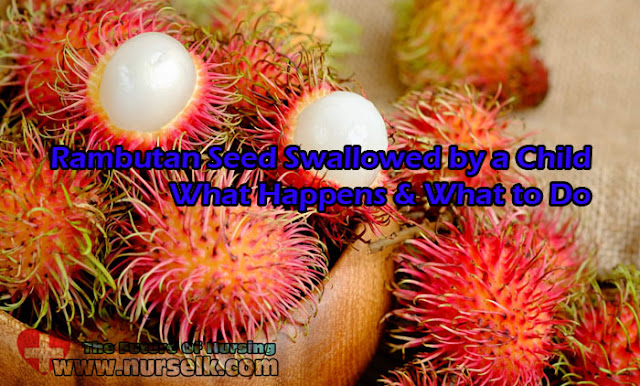
%20What%20Happens%20&%20What%20to%20Do.jpg)
Discovering your child has swallowed a rambutan seed can be alarming. While it often passes without incident, understanding the risks and knowing the correct steps is crucial. Here's a detailed guide:
What Happens When a Child Swallows a Rambutan Seed?
The Immediate Journey:
Mouth & Throat (Esophagus): This is the highest risk stage. A rambutan seed is relatively large (typically 1.5 - 3 cm long, 1 - 1.5 cm wide) and smooth but oval-shaped. The main dangers here are:
Choking: If the seed accidentally enters the windpipe (trachea) instead of the food pipe (esophagus). This is an EMERGENCY.
Esophageal Blockage: The seed could get stuck in the esophagus, causing immediate discomfort and inability to swallow even saliva.
Stomach: If the seed makes it past the esophagus, it enters the stomach. Stomach acid won't dissolve the hard seed.
Intestines: The seed will pass through the small intestine and into the large intestine (colon). This is where most concerns about "passing" it arise. The seed is indigestible but usually smooth enough to move through.
Exit: The seed should eventually pass out in the stool, usually within 2-5 days, but sometimes up to a week.
Potential Risks & Complications:
Choking (Airway Obstruction): The most serious immediate risk. Signs include sudden inability to breathe, cough, talk, or cry; high-pitched sounds while inhaling; clutching the throat; turning blue (cyanosis). Requires immediate first aid.
Esophageal Obstruction: Seed gets stuck in the esophagus. Signs: Sudden chest pain or discomfort, drooling excessively, inability to swallow saliva (leading to drooling), pain with swallowing, vomiting, gagging, feeling like something is stuck.
Intestinal Blockage (Bowel Obstruction): Less common, but possible, especially in smaller children or if multiple seeds are swallowed. The seed could lodge in the narrow intestines. Signs: Abdominal pain/cramping (often severe and intermittent), vomiting (may become green or yellow/bilious), bloated/swollen abdomen, inability to pass gas or stool, constipation, restlessness.
Perforation: Very rare. The sharpest point could potentially puncture the esophagus, stomach, or intestine, especially if there's a pre-existing weakness. This is a medical emergency. Signs: Severe abdominal pain, fever, vomiting blood, or blood in stool.
What To Do: Step-by-Step Guide
Assess IMMEDIATELY for Choking (Seconds Matter):
Is your child coughing forcefully? Encourage them to keep coughing. This is the most effective way to dislodge an object. Do not interfere unless coughing becomes ineffective.
Is your child unable to cough, breathe, cry, or speak? Are they turning blue? THIS IS CHOKING. ACT IMMEDIATELY:
Call Emergency Services NOW. If someone else is present, have them call while you start first aid.
Perform Abdominal Thrusts (Heimlich Maneuver) for a conscious child over 1 year: Stand behind the child. Wrap your arms around their waist. Make a fist with one hand, thumb side in, place it just above their belly button (well below the breastbone). Grasp your fist with your other hand. Give quick, upward thrusts into the abdomen. Repeat until the object is expelled or the child becomes unconscious. [Look up current CPR/Choking guidelines for visual details].
If the child becomes unconscious: Start CPR (beginning with chest compressions) and follow emergency dispatcher instructions. Check the mouth for the object before giving breaths, but only if you can see it.
If the Child is NOT Choking (Breathing Normally, Coughing Effectively or Stopped Coughing):
Stay Calm: Your calmness helps the child stay calm.
Do NOT Panic: Avoid screaming, shaking the child, or inducing vomiting. Vomiting could increase the risk of the seed entering the airway.
Assess the Situation:
Did you see them swallow it? How long ago?
How old is the child? Risk is generally higher for younger/smaller children within the 3-10 range.
How big was the seed? (Estimate based on the fruit).
Is the child showing ANY symptoms? Ask about pain (point to where it hurts), difficulty swallowing, drooling, nausea. Observe carefully.
Call Your Pediatrician or Healthcare Provider IMMEDIATELY:
Even if the child seems fine, call your doctor right away. Do not wait for symptoms to appear. Explain exactly what happened: "My [age] year old child swallowed a rambutan seed about [time] ago. They are currently breathing normally and not showing [list symptoms they DON'T have]."
Follow their specific advice. They know your child's medical history and can give the best guidance. They will likely ask detailed questions about the child's current state.
Monitoring at Home (ONLY if Advised by Doctor & Child is Asymptomatic):
Monitor Strictly: Watch for any signs of trouble for at least the next 48-72 hours, and be aware symptoms could appear later.
Watch for Danger Signs (Require Immediate ER Visit):
Difficulty breathing, wheezing, stridor (high-pitched sound).
Excessive drooling or inability to swallow saliva.
Persistent or severe chest/abdominal/throat pain.
Vomiting (especially repeated or forceful).
Refusal to eat or drink.
Abdominal bloating, tenderness, or rigidity.
Inability to pass stool or gas.
Blood in vomit or stool.
Fever.
Lethargy or significant distress.
Check Stools: Sift through the child's stool for the next 5-7 days to confirm the seed has passed. It will look the same as when swallowed.
Diet: Offer soft, easy-to-digest foods as tolerated. Ensure good hydration (water, clear fluids) to help things move smoothly. Avoid very sticky or doughy foods that could theoretically clump around the seed (though unlikely with its smoothness).
Activity: Normal activity is usually fine unless the doctor advises otherwise.
When to Go to the Emergency Room (ER):
Any signs of choking (even if resolved after thrusts - still need evaluation).
Any signs of esophageal blockage (drooling, can't swallow, chest pain).
Any signs of bowel obstruction (severe abdominal pain, vomiting, bloating, no stool/gas).
Severe pain anywhere.
Blood in vomit or stool.
High fever.
If your pediatrician instructs you to go.
If you are simply too worried and want immediate evaluation. Trust your instincts.
Why Rambutan Seeds Are Usually (But Not Always) Lower Risk:
Smooth Surface: Unlike nuts or popcorn kernels with sharp edges, rambutan seeds have a very smooth, hard, polished surface. This significantly reduces the risk of scratching or perforating the digestive tract lining.
Oval Shape: Their elongated oval shape is often more conducive to passing through curves in the intestines than a perfectly round object of the same width.
Size Context: For a healthy 5-10-year-old, a typical rambutan seed (1.5-3cm) is often smaller than the diameter of their esophagus and intestines, making passage likely. For a small 3-year-old, the risk is higher.
Prevention is Key:
Remove Seeds Before Serving: This is the single most effective step. Cut the rambutan flesh away from the seed before giving it to children, especially those under 6-7.
Supervise Eating: Always supervise young children when they eat any fruit with seeds or pits.
Teach Spitting: Teach children how to safely spit out seeds into a napkin or their hand (and then dispose of it). Practice with safe items.
Explain the Danger: In age-appropriate terms, explain why seeds shouldn't be swallowed ("It's not food, it could get stuck and make your tummy very sore").
Choose Seedless Varieties: If available, opt for seedless rambutan varieties.
Summary & Key Takeaways:
Choking is the biggest immediate emergency. Know the Heimlich maneuver.
If NOT choking but swallowed the seed: STAY CALM, DO NOT INDUCE VOMITING.
CALL YOUR PEDIATRICIAN IMMEDIATELY, even if the child seems fine.
Monitor closely for ANY warning signs (breathing trouble, drooling, pain, vomiting, no stool). Go to the ER immediately if these appear.
If advised to monitor at home, check all stools diligently for 5-7 days.
Most smooth rambutan seeds pass uneventfully within a few days, especially in older children.
PREVENTION by removing seeds before serving is essential.
When in doubt, always seek professional medical advice. Do not hesitate to go to the ER if your child shows concerning symptoms or if you are worried. It's always better to err on the side of caution when it comes to a child's health.

No comments:
Post a Comment